From July 2025 to March 2026, I spent nine months as a long-term intern in Konica Minolta’s DX team, which supports digital transformation inside the company. It was my first long-term internship in Japan, and my first time working on a project that was not a class assignment or a lab experiment, but part of how a large company actually runs.
The project was about generative AI, and more specifically about a technique called retrieval-augmented generation, or RAG.
What RAG is
Large language models are good at writing fluent answers, but they only know what they learned during training. They don’t know a company’s internal manuals, product documents or the decisions made in last month’s meeting. Ask them about those, and they may simply make something up.
RAG is a way around this. Before the model answers, the system first searches a collection of documents for the passages most related to the question. It turns both the documents and the question into numerical representations, finds the closest matches, and hands those passages to the model together with the question. The model then writes its answer based on what was retrieved, rather than on memory alone. In other words, it looks things up first and writes second.
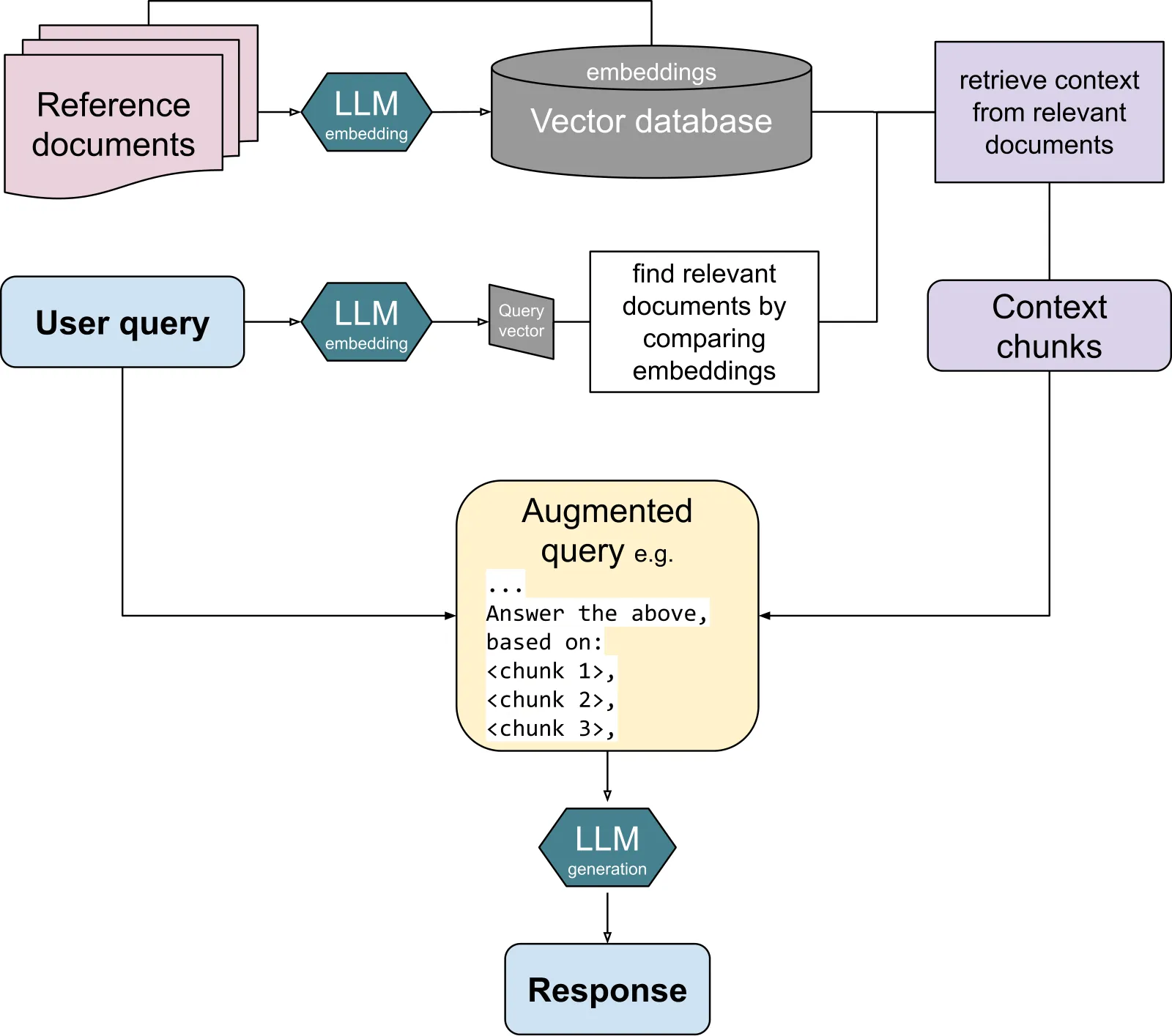
Diagram by Turtlecrown, licensed under CC BY-SA 4.0, via Wikimedia Commons.

This makes RAG very useful inside companies, where the knowledge people need is spread across many documents. But it also raises a new question: how do you know the answers are right? A RAG assistant can sound confident and still pick the wrong document, miss an important detail, or mix up two similar products. That is why evaluation matters so much. It is the quiet step that decides whether a system like this can be trusted.
Inside an enterprise project
My work focused on that evaluation side. I built a workflow on AWS to check how well RAG answers held up, and learned to work with AWS and its generative AI services along the way, from setting things up to running evaluations and making sense of the results.
Working inside an enterprise project felt very different from research. In the lab, I could design an experiment the way I wanted and change it the next day. Here, there were real users, existing systems and processes to fit into, reviews to pass, and people in many different roles who all needed the work to make sense to them. A good idea was only the beginning; it also had to be clear, reliable and useful to someone else.
The workplace itself was multilingual. Every day involved more than one language, depending on who I was working with. It became one of the things I valued most about the internship: learning to explain the same idea clearly to different people, in whichever language worked best for them.
Nine months is long enough to become part of a team rather than a visitor. Over time, I got to know how the team planned and shared its work, and I became more comfortable taking on responsibility for my part of it. Toward the end, I was asked whether the evaluation workflow could also be used by the product owner team, not only by engineers. So I reorganized it into a few simple steps and went through it together with them until they could run evaluations on their own. It reminded me that a tool only really matters when the people who need it can use it without you.
Looking back
These nine months gave me experience I couldn’t have gained in a lab: working inside a real organization, in more than one language, on a system that other people depended on.
They also left me with an idea. After spending so much time thinking about how RAG systems find and use information, I wanted to build one of my own. If a company could use RAG to answer questions from its documents, why not a personal website that could answer questions about my own work? That idea became the small AI assistant on the home page of this site, which you can ask about my projects, research and experience. It is much smaller than anything I worked on during the internship, but it started there.
I’m grateful to everyone on the team for having me throughout these nine months. I hope to keep building things that are useful not only to me, but to the people around me.